You finish a client project you’re proud of. You walk into your kitchen and there’s nobody to tell. It’s not that you don’t have any friends or a caring spouse. It’s more like, “nobody in my life understands the specific weight of what I’m carrying….” sort of way.
Trust me. I get it. My husband loves me, AND even after 10 years he doesn’t get it. I still remember having an amazing day. It was the rare day when everything WENT RIGHT. New clients landed, great speaking engagement. I was on cloud 9. I come home, and my husband is like “that’s great, want to watch a movie?” and he put on First They Killed My Father (great film, total buzzkill).
That’s the thing. Your partner listens. Your friends try. But none of them know what it’s like to stare at a landing page for two hours, unsure if the headline is brilliant or embarrassing, with no one to ask.
That feeling takes a toll on your business. And if you’ve been marketing alone for years, wondering why it keeps getting harder instead of easier, the answer probably isn’t that you need another course or a better content calendar.
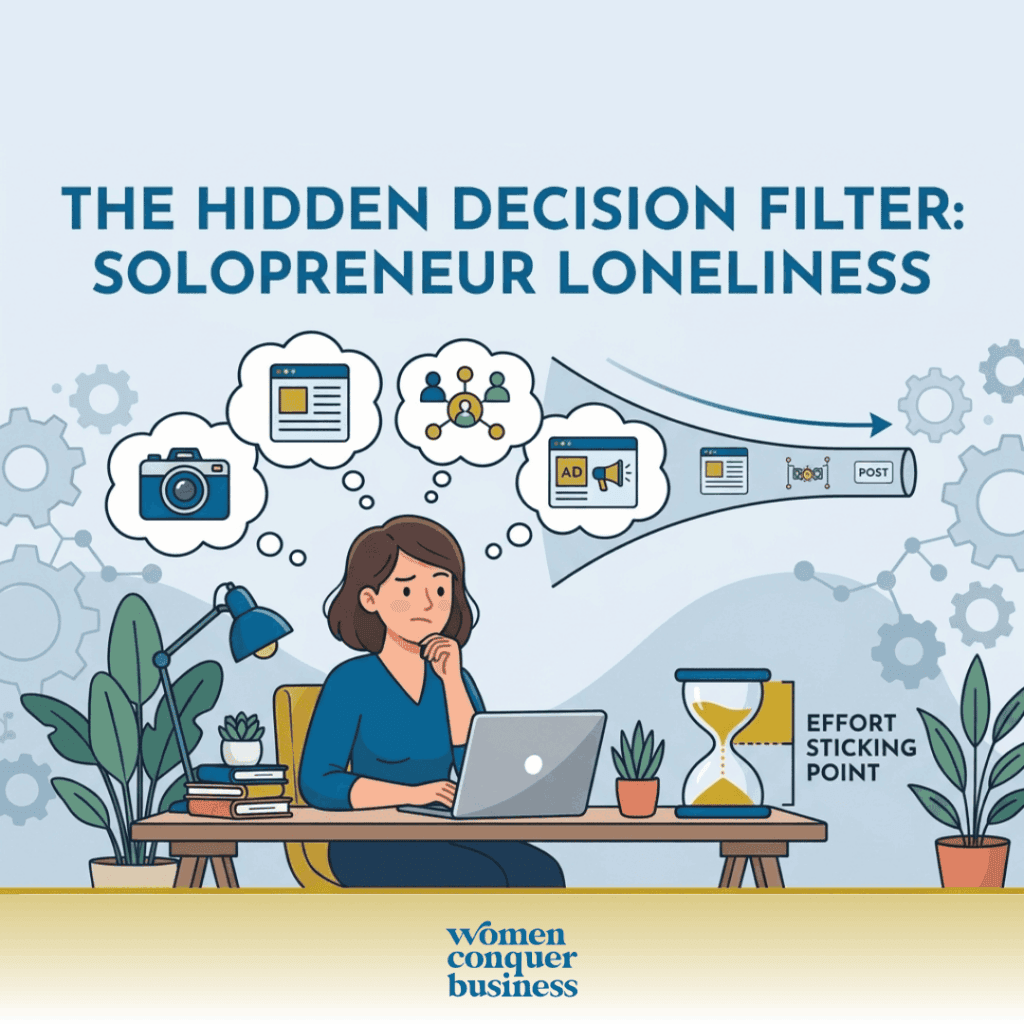
Solopreneur loneliness changes the way you make decisions. What you’re willing to try shrinks. How long you stick with something before quitting gets shorter. This decision fatigue in marketing is a well-documented phenomenon that compounds over time. None of that shows up on a checklist of marketing tips.
What the Research Says (And Why It Should Make You Feel Better)
The data on freelancer and solopreneur isolation is worse than most people expect.
A 2024 Leapers survey of 715 self-employed professionals in the UK found that 90% experienced feelings of isolation, disconnection, or loneliness during the year. Seventy-two percent reported feeling isolated “sometimes or frequently,” and one-third said it was frequent, roughly three times the rate for the general workforce.
The business impact goes beyond your mood. A 2023 study published in the Journal of Business Venturing Insights found that entrepreneurial loneliness increases business exit intentions by eroding passion for the work. Researchers studied founders in the UK and Indonesia and found the same pattern in both: loneliness doesn’t make you quit directly. It drains the thing that kept you going. It’s the same mechanism behind why solopreneurs burn out on marketing: it’s the working conditions that are the problem (not you).
And a 2025 integrative review of 163 studies in the Journal of Small Business Management concluded that loneliness increases stress, reduces creativity, and impairs productivity across entrepreneurial contexts.
All these studies point to the same thing: being a solopreneur is lonely, it can erode your passion for the work, burn you out, and make you less productive or willing to try new things. But here’s the thing: being a solopreneur doesn’t mean you have to do everything alone.
The Loneliness Loop, Explained
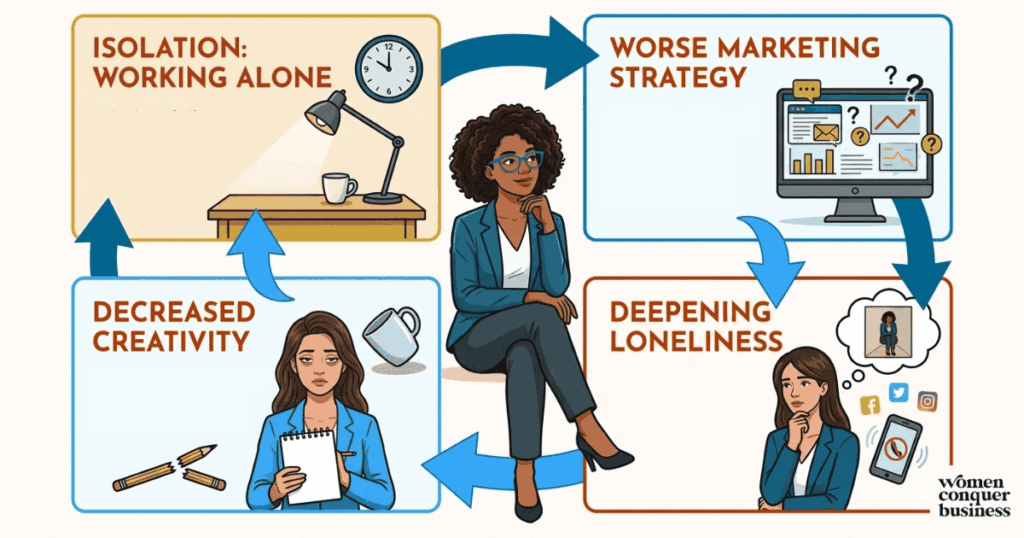
Researchers Ozcelik and Barsade identified what they call the “regulatory loop model of loneliness” in a 2018 study published in the Academy of Management Journal. The core finding: loneliness triggers withdrawal behaviors that reduce connection, which intensifies loneliness. It feeds itself.
Here’s how that loop plays out when you’re a solopreneur doing your own marketing strategy:
Liked this? You'll like our events even more.
Our live workshops and webinars are the easiest way to get a feel for the Women Conquer Business approach — practical marketing you can use that week, no hype, no pressure. Catch the next one live, or watch a past session on your own schedule.
See Upcoming & Past Events → Prefer to jump in? Let's gooooo- Stage 1: You work alone. Without a sounding board or anyone to sanity-check your ideas before you invest hours in them.
- Stage 2: You second-guess everything. You write a landing page. Rewrite it. Rewrite it again. You can’t tell if it’s good because there’s no feedback. (Sorry, AI doesn’t cut it.)
- Stage 3: You publish something lukewarm. It’s not your best work, and you know it. BUT… you’re exhausted from the rewriting, so you put it out anyway.
- Stage 4: You get lukewarm results. Low engagement, few clicks, maybe one inquiry that goes nowhere. Your conclusion: “I’m bad at this!”
- Stage 5: You pull back. You post less. You stop pitching. You tell yourself you need to “figure out your strategy” before doing anything else. But “figuring it out” alone looks a lot like consuming content instead of creating it.
Then you’re back at Stage 1, except now it’s worse. Because now you have “evidence” (or what feels like evidence) that your marketing doesn’t work.
The loop doesn’t start with bad marketing skills. It starts with having no one to reality-check the voice in your head that says “this isn’t good enough,” when maybe it was good enough but there were other factors you didn’t consider because you didn’t talk to anyone.
How the Loop Shows Up in Your Marketing (Specifically)
These four patterns look like marketing problems, but they’re loneliness symptoms in disguise. Understanding these solopreneur marketing challenges is the first step toward breaking the cycle.
- Chronic rewriting instead of publishing. You draft a newsletter, edit it seven times, send it three days late (or not at all). The issue isn’t perfectionism, it’s that you have no external gauge for “good enough.” Without an expert or a peer who can say “this is fine, send it,” you keep polishing until the deadline passes.
- Defaulting to what you already know. You stay on Instagram because it’s familiar, even though your clients find you through Google. Trying a new channel means risking failure without support, and the loop has already made failure feel personal. So, you stick with what’s comfortable, even when comfortable means invisible.
- Avoiding visibility altogether. You don’t pitch yourself for podcasts or reach out to potential referral partners. Raising your rates? Not happening. The loneliness loop makes exposure feel dangerous, because there’s no one to catch you if it goes wrong.
- Researching as a substitute for doing. You read another blog post about email marketing. You watch a webinar about SEO. You bookmark fourteen articles about content strategy. It feels productive, but it’s procrastination wearing a name tag. The research fills the space where a conversation with a peer should go.
If you recognize yourself in these, it doesn’t mean you lack discipline. It means you’re running a business in conditions that research says will produce exactly this behavior.
What Breaks the Loop
Here’s the honest answer: not everything works.
Generic networking events rarely help, because the connections are too shallow and too infrequent to interrupt the cycle. A Fast Company report on solopreneur loneliness cited career coach Gabriela Flax’s observation that cohorts lose meaningful connection above six or seven people. Bigger isn’t always better for breaking isolation. Five people who show up every Tuesday will do more than a 500-person Slack channel.
What the research supports is regular, structured peer accountability with people doing similar work.
Dr. Gail Matthews at Dominican University of California studied 267 professionals and found that those who shared written goals and sent weekly progress updates to a peer achieved their goals at significantly higher rates than those who worked alone. The group with weekly accountability had a 76% success rate, compared to 43% for those keeping goals to themselves.
That gap isn’t small. And it maps directly to the loneliness loop: the weekly update creates a reason to keep going, the peer creates a sounding board, and the rhythm interrupts the slow withdrawal that makes everything worse.
Not all communities break the loop. According to Marketing General’s 2025 benchmarking data, association leaders report that roughly half of members who don’t renew cite lack of engagement as the reason. In other words, people join communities and still feel alone inside them, because the community wasn’t designed for the kind of connection that interrupts isolation.
What works looks like this:
- Small group size. Six to eight people. You need to know names, not scroll a feed. It can be a smaller group within a larger community working on similar goals.
- Consistent rhythm. Weekly or biweekly. The regularity matters as much as the content.
- Shared context. People doing similar work at a similar stage. This is so important. A solopreneur running a coaching practice and a VC-backed SaaS founder don’t share enough operational reality to help each other. I feel this way about the “marketing gurus” who have large organizations appealing to solopreneurs. Ask yourself: what do they really know about my daily realities?
- Low-pressure accountability. Not “did you hit your revenue target” but “did you send the newsletter this week?” The small, repeatable marketing actions are where the loop breaks.
This is what slow marketing looks like in practice. A small group of peers who keep you honest about the work, so you don’t disappear into the loop.
The Loop Breaks When You Stop Doing It Alone
Solopreneur loneliness isn’t something you push through with more discipline. The research is clear on that. Discipline erodes under isolation, and so does passion, and the creative energy you need to write a single email. Your marketing doesn’t get better by trying harder in the same conditions that made it worse. (If you’ve been wrestling with staying motivated as a solopreneur, this might be the missing piece.)
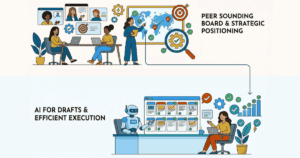
What changes the pattern is having people in your corner who understand the specific work you’re doing. A handful of peers who know your name, know your business, and will tell you “that landing page is fine, hit publish.” I prefer an expert-led community where an experienced marketer can hold the container and answer burning questions based on practical experience.
If you’re not sure where to start, the WCB community was built around this exact problem: small-group connection for solopreneurs who are tired of marketing alone. It’s structured around monthly themes and weekly accountability.
But wherever you find it, find it. Six weeks of consistent peer check-ins will tell you more about what’s been wrong with your marketing than six months of courses.
Frequently Asked Questions
Why is solopreneurship so lonely even when I have clients?
Client relationships are transactional by nature. You’re delivering a service, not sharing the mental load of running a business. The loneliness isn’t about being around people. It’s about having no professional peers who understand your specific decisions, pressures, and doubts. Clients fill your calendar. They don’t fill the gap where a colleague would be.
Does working alone affect business performance?
Yes, and the research is substantial. A 2025 review of 163 studies found consistent links between entrepreneurial loneliness and reduced creativity, increased stress, and lower productivity. A separate study found loneliness increases business exit intentions by draining entrepreneurial passion. This isn’t anecdotal. Isolation degrades the cognitive and emotional resources you need to run a business.
How do I find the right peer group as a solopreneur?
Start with three criteria: shared business stage (similar revenue, similar challenges), consistent meeting rhythm (weekly or biweekly, not “whenever”), and small size (six to eight people maximum). A business community for solopreneurs designed around these principles can provide the structured peer connection you need.
Start with three criteria: shared business stage (similar revenue, similar challenges), consistent meeting rhythm (weekly or biweekly, not “whenever”), and small size (six to eight people maximum). You can find peers through existing communities, marketing coaching programs, or even by reaching out to two or three solopreneurs you already know and proposing a standing weekly call. Where you find the group matters less than whether it meets regularly.
Get the Free 90-Day Solopreneur Marketing Plan Template
Quarterly goals, a simple content calendar, and a monthly review framework — all in one template. Built for business owners who want a system, not a hustle.
No spam. Unsubscribe anytime. We respect your inbox.
Want to see how we actually work before you commit?
Our live workshops and webinars are the easiest way to get a feel for the Women Conquer Business approach — practical marketing you can use that week, no hype, no pressure. Catch the next one live, or watch a past session on your own schedule.
See Upcoming & Past Events → Prefer to talk it through? Book a free clarity call