
Marketing Strategy
Marketing Strategy for Women Solopreneurs: Your Complete 2026 Guide
Marketing frameworks, tools, and strategies that work when you’re doing everything yourself (without the hustle).
Most marketing advice is written for companies with teams and budgets. A marketing director, a content person, someone running ads. You have… you.
In my 25+ years doing marketing strategy, I keep coming back to the same framework. I call it the 3 C’s:
Clarity
Know exactly who you serve and what you’re known for.
Consistency
Show up regularly on 1–3 channels (not all of them).
Conversion
Build a system that turns attention into clients.
Browse by topic
Slow Marketing Philosophy
There’s a reason you feel like you’re on a hamster wheel. Most marketing advice was designed for teams with time to post daily, test constantly, and chase every platform shift.
Slow marketing means choosing two or three channels and going deep. Creating content that accumulates in value over months and years, not days.
slow marketing principles
Depth over breadth
Permission over interruption
Systems over hustle
Measuring what matters
… It also means developing an awareness of how your work and what to do when you’re at your best (or not).
Good Week
Write a blog post, record a video, plan next quarter’s content, update your website.
Hard Week
Schedule pre-written posts. Reply to comments. Send a newsletter from a template.
5 Keys
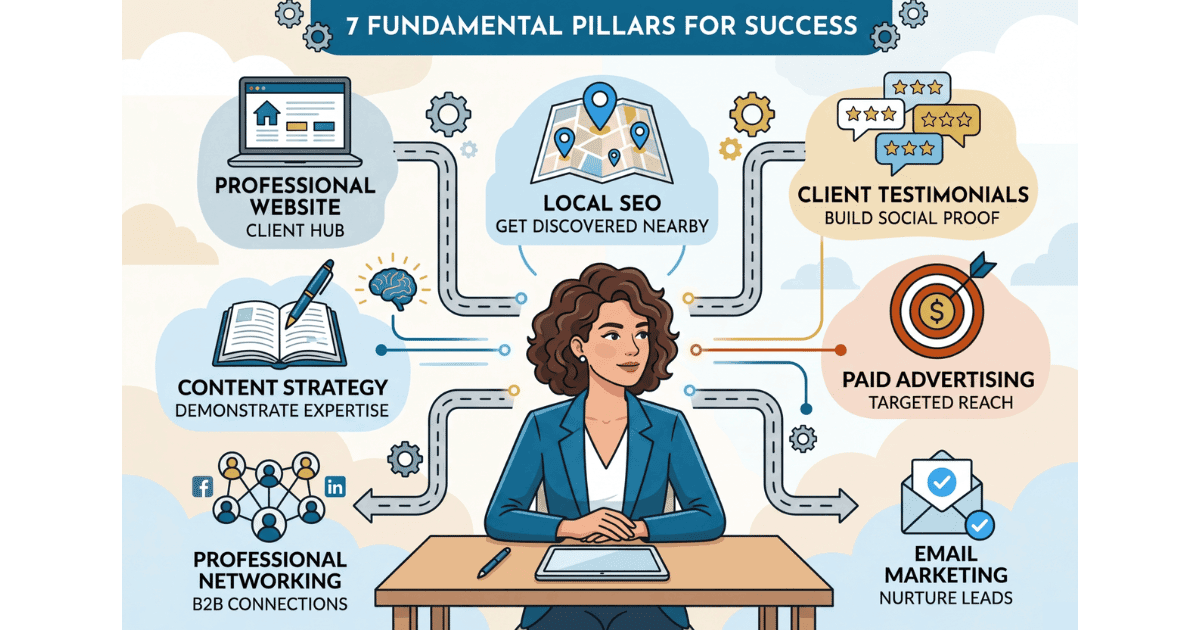
The building blocks of a solopreneur marketing strategy
Each section gives you an overview. For more information, click through to the deep-dive article.
Set goals worth keeping
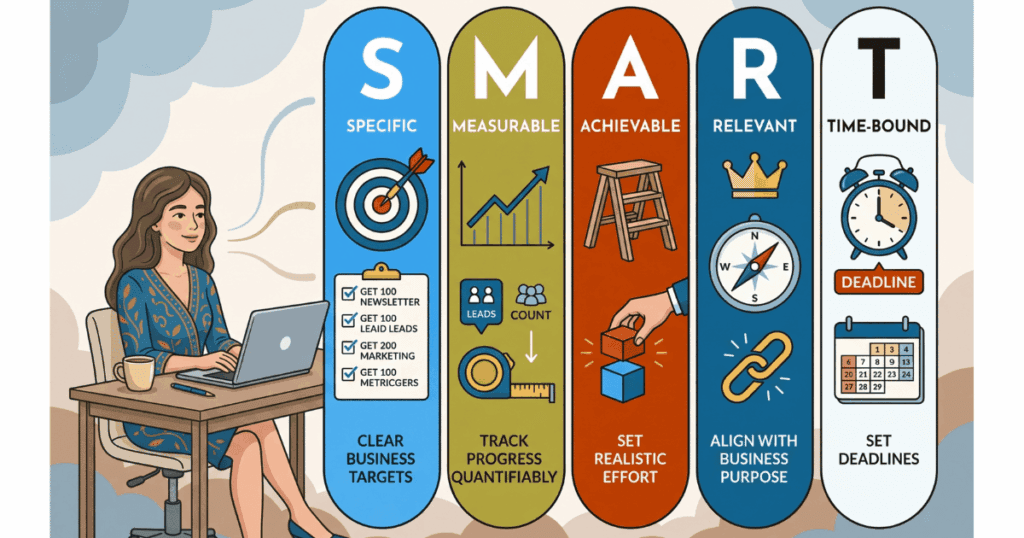
“Increase website traffic by 200%” is a SMART goal for a company with a content team. For you, “publish two blog posts per month and grow organic traffic by 20% over six months” is closer to reality.
Choose your channels wisely
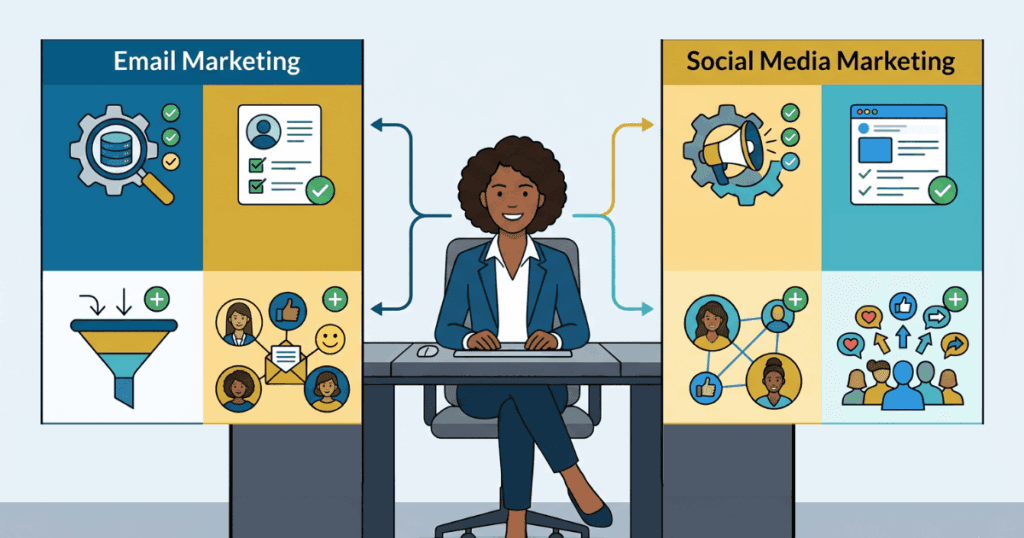
Email almost always outperforms social media for generating revenue. Pick one or two platforms where your clients spend time. Go deeper there. Ignore the rest.
Email vs social media →
Build a content system
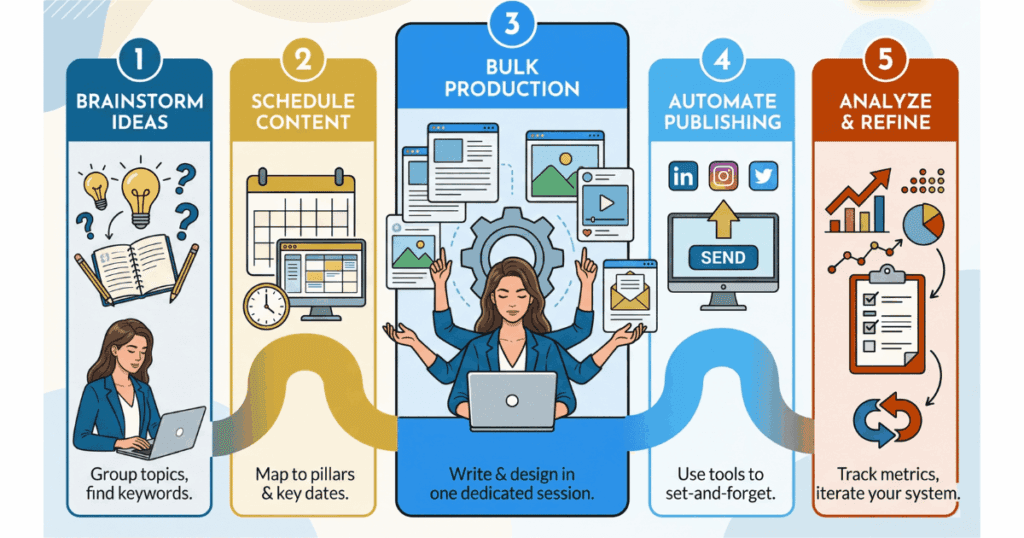
Content batching, or creating a month’s worth of content in one focused session, is an example of a content system. However you do it the key is to respect your energy cycles and the Good Week / Hard Week rhythm.
Get found: SEO and visibility
A blog post optimized for the right search terms (and intent) keeps generating traffic months after you publish it. Compare that to a social post with a 24-hour shelf life.
Convert attention into clients
Content → lead magnet → email nurture → conversation. Each step builds trust incrementally. If you don’t have that middle step yet, that’s your first priority.
Featured articles
The most practical, most-read articles on marketing strategy for solopreneurs.
When to get help
There’s a point where DIY marketing stops being cost-effective. It’s usually when you’ve found you have better uses for your time.
Signs you’ve outgrown DIY:
- Your growth has stalled and you can’t figure out why
- You know what to do but can’t execute consistently
- You’re spending more time on marketing than client delivery
- Tech chaos is eating hours you don’t have
Marketing Strategy
Project-based, custom 90-day marketing strategy tied to your business goals. Know what to do and when to do it.
Marketing Coaching
Get both tactical and strategic coaching tailored to your goals for ongoing 1-on-1 accountability.
Marketing Membership
Committed DIY-er? Not ready for ongoing individual support? You’ll love our community.
Not sure which fits? See what marketing consultants cost →
Get the Free Solopreneur Marketing Audit Worksheet
Rate your marketing across 5 key areas in under 10 minutes. Your scores reveal exactly where to focus first, so you stop spreading yourself thin.
No spam. Unsubscribe anytime. We respect your inbox.
Frequently Asked Questions
The best strategy is one you can sustain. For most service-based solopreneurs, that means a clear website, consistent email marketing, one or two social media channels, and evergreen content (blog posts, videos, or podcasts) that builds visibility over time. The 3 C’s framework, Clarity, Consistency, and Conversion, helps you prioritize what matters and ignore what doesn’t.
It depends on your revenue, growth goals, and how much time versus money you have. Some solopreneurs spend $0 in cash and invest 5 to 10 hours per week. Others spend $500 to $2,000/month on tools, ads, or professional support. The right answer is the amount you can sustain for six months or longer without financial stress. Read more about marketing consultant costs to help you plan.
Slow marketing is a capacity-aware approach to marketing that prioritizes depth over breadth, consistency over virality, and owned assets (like your website and email list) over rented platforms (like social media). It’s designed for solopreneurs who need their marketing to work without burning them out.
Start with the 3 C’s. Get clear on your audience and positioning first. Then choose two or three channels you can show up on consistently. Build one conversion path (content to lead magnet to email to conversation). Plan in 90-day cycles so you can adjust without overhauling everything quarterly. You don’t need a 30-page marketing plan. You need a one-page focus document.
If you have more time than money, DIY with good guidance (like this guide and the Strategic Marketing Membership) makes sense. If you have more money than time, or if you’ve been stuck in the same place for six months, professional support pays for itself. Read our guide to finding the right consultant to know what to look for.
Start with your website and email list (owned channels you control). Add one social media platform where your ideal clients spend time. That’s it for the first six months. Once those are running consistently, you can consider adding a second social channel or investing in SEO. More channels before you have systems in place means more chaos, not more clients.